Our heritage
Woven in Yeola.
Aditi Paithani has been weaving and selling handloom Paithani in Yeola, in Nashik district, since 2007. Yeola is one of the great Paithani towns of Maharashtra, where looms still clatter behind front doors. Our range runs from single and double pallu silks to Muniya and Tripal Mani brocades, Mina Mor tissue pallus and allover Paithanis.
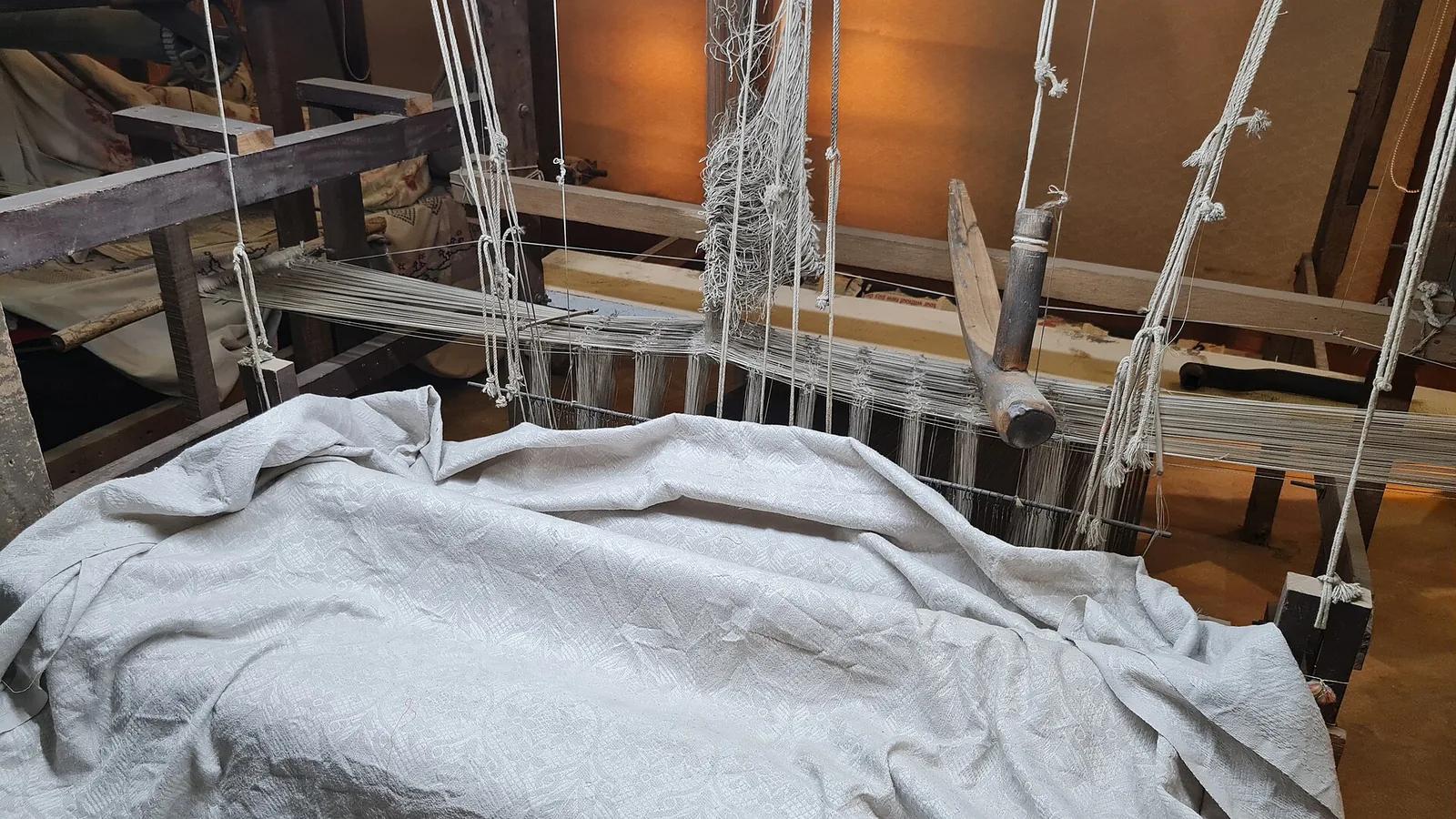
How a Paithani is made
- 01
Silk and zari
Pure mulberry silk is dyed in the colours Paithani is known for: jambhli, kumkum, pista, firozi. Zari, gold-coated silver thread, is wound alongside it.
- 02
The warp
Thousands of silk threads are stretched and drawn onto the handloom. Setting a warp alone can take days.
- 03
Tapestry weaving
Pallus and borders are woven in a tapestry technique: each motif is built by hand with small bobbins of coloured silk, interlocked weft by weft.
- 04
The peacock pallu
Peacocks, parrots (muniya), lotuses and asawali vines take shape slowly. Because of the technique, the design looks the same on both sides.
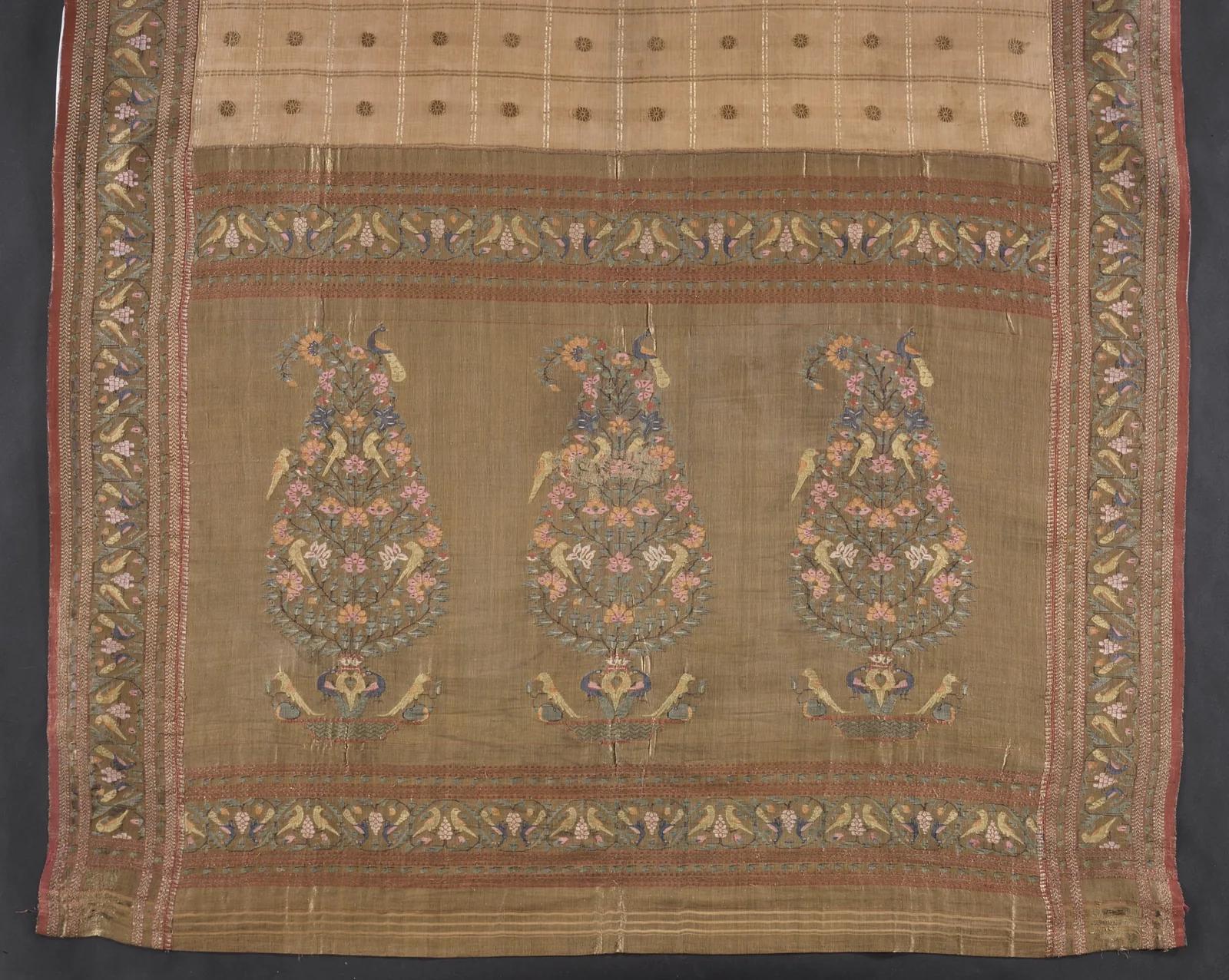
From the archive
A pallu that outlives us
This bridal Paithani pallu, now in the collection of the Los Angeles County Museum of Art, shows the asawali motif: flowering vases with birds, woven in muted silk on a gold ground. Our Heirloom Asawali is woven after it. Paithanis like this were made to be handed down, and they still are.
See the Heirloom AsawaliVisit the store
Come and touch the silk.
Khatri Lane, near Baleshwari Temple, Yeola, Nashik, Maharashtra 423401
Monday to Saturday, 10am to 7pm. Closed Sundays.
Get directions